
What are veneers?
Thin porcelain, bonded to the front of the tooth
A veneer is a thin shell of porcelain bonded to the visible surface of a tooth. It changes colour, shape, length and alignment in a way that no amount of whitening or polishing can, while leaving the body of the tooth intact.
Because each veneer is made individually, a case can be as small as one tooth or as complete as the full width of your smile.
Discoloration
Intrinsic staining — tetracycline, fluorosis, trauma — that whitening cannot treat.
Chips & cracks
Restoring broken or fractured teeth to their ideal shape and strength.
Shape & size
Lengthening short teeth, correcting asymmetry, creating even proportions.
Minor gaps
Closing spaces between teeth without orthodontic treatment.
Worn enamel
Restoring teeth shortened by grinding or acid erosion.
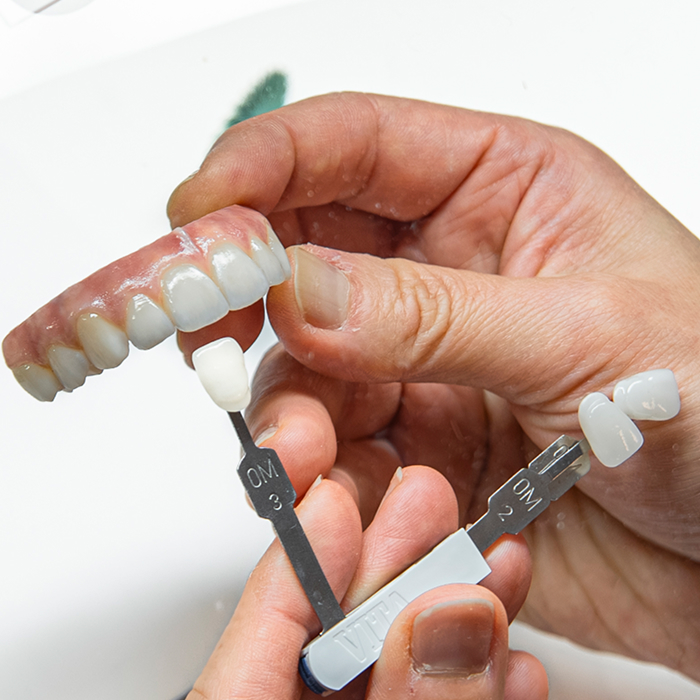
Is it right for you
What veneers fix well, and what they don't
Veneers are a cosmetic solution, not a structural one. Being clear about that distinction at the consultation saves disappointment later, and in some cases points toward a simpler or less expensive treatment that gets you the same result.
Where they excel
Deep intrinsic staining that whitening cannot lift, such as tetracycline discoloration or a tooth darkened after a root canal. Chips and worn edges. Teeth that are slightly small or oddly shaped. Narrow gaps. Mild crowding where the teeth are healthy but the line is uneven.
Where something else is better
Significantly crooked or crowded teeth are better moved than covered — Invisalign first, veneers after if you still want them. A single chipped corner is often better handled with bonding at a fraction of the cost. A tooth with a large filling or a crack usually needs a crown.
What has to be right first
Untreated decay and gum disease are addressed before any cosmetic work begins; veneers bonded to an unhealthy foundation will not last. Active grinding needs a nightguard as part of the plan. None of these rule you out, they simply come first.
The process
Two visits, and a preview before you commit
The part patients most often do not expect is how much happens before anything is permanent. You see the proposed smile, wear a version of it, and approve it before the porcelain is ever made. Nothing about the final result should be a surprise.
The design stage looks at more than the teeth in isolation: lip line, facial proportion, how much tooth shows when you speak, and how the smile sits against your features.
Consultation & design
Photographs, digital scans and a conversation about what you actually want changed. We design the proposed smile and show it to you before any treatment begins.
Trial smile
A temporary version of the design is placed over your teeth so you can see it in your own face, in daylight, and live with it briefly. Adjustments are made here, while everything is still reversible.
Preparation
A very thin layer of enamel is removed so the veneer sits flush rather than bulky, typically around half a millimetre. Digital impressions go to the laboratory and you wear temporaries in the meantime.
Placement
The porcelain is tried in and checked against the design before bonding. Once you approve the fit, shade and shape, each veneer is bonded permanently and the bite is refined.
Real results
Before and after
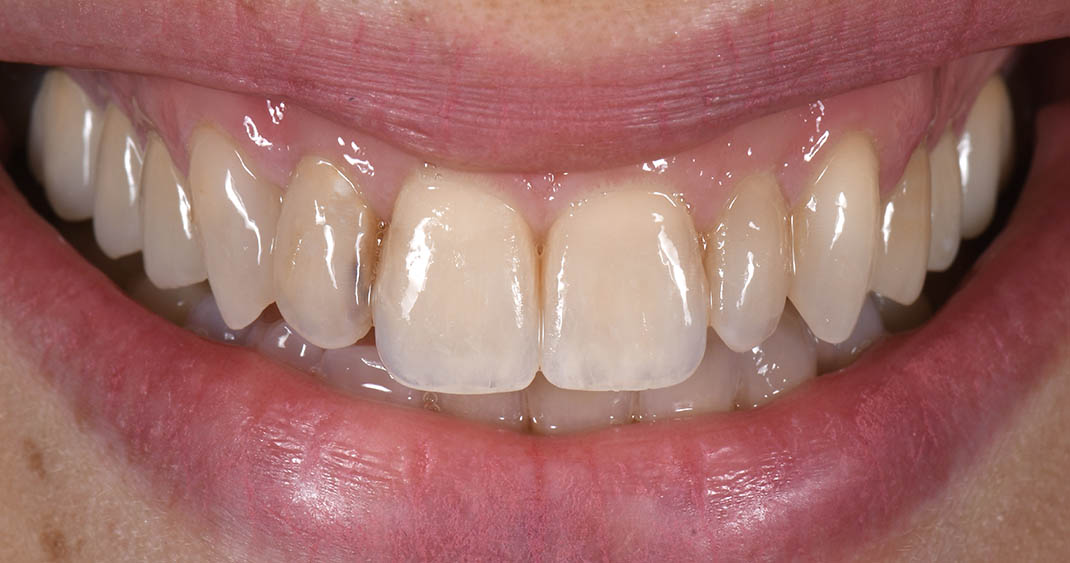
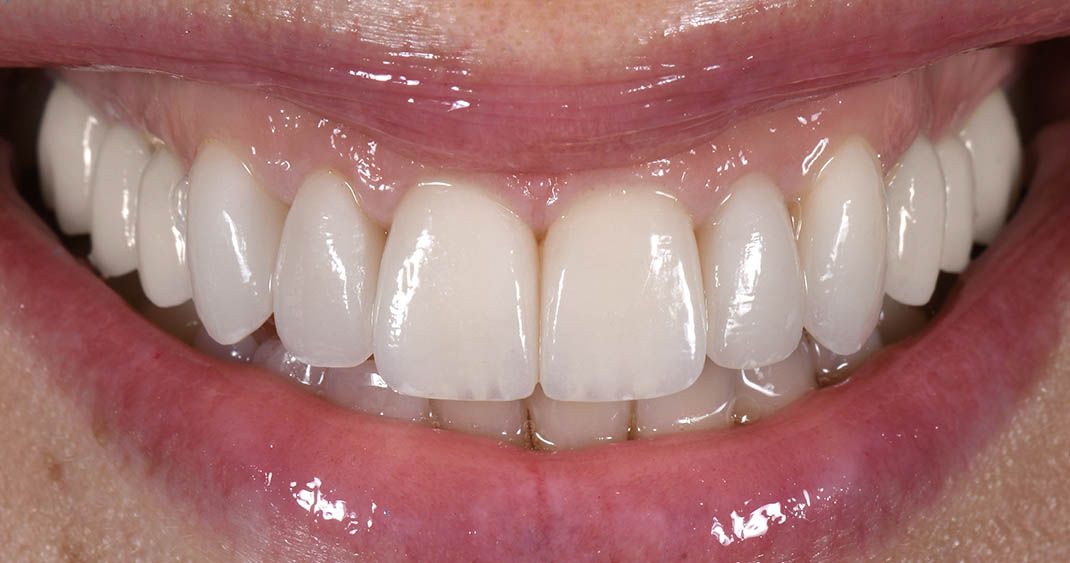
Living with them
Caring for veneers
Daily care
Brush twice a day and floss normally. Porcelain does not decay, but the tooth underneath and the gum line around it still can.
If you grind
A nightguard is not optional advice for grinders. It is the single thing most likely to decide whether your veneers last five years or fifteen.
Staining & colour
Porcelain resists staining better than natural enamel, so the shade you leave with is broadly the shade you keep. Whitening will not change it later.
Longevity & replacement
Ten to fifteen years is a realistic expectation, often longer. When a veneer eventually needs replacing, the tooth is re-prepared and a new one is made.
FAQ
Veneer questions, answered
Are veneers permanent?
They are considered permanent because a small amount of enamel is removed during preparation. That step cannot be undone, so the teeth will always need to be covered by something afterward.
How many will I need?
Most patients treat the teeth visible when smiling, typically six to ten upper teeth. The exact number depends on how wide your smile is and which teeth show.
Will they look fake?
That reputation comes from an era of veneers that were too white, too uniform and too opaque. Shade, translucency and slight natural variation are chosen deliberately so the result reads as your teeth, only better.
Can I get veneers if I grind my teeth?
Grinding shortens the lifespan of veneers, so a nightguard is built into the plan. It does not rule you out, but skipping the guard afterward usually ends in a chip.
Can I whiten my teeth afterward?
Whitening will not change the colour of porcelain. If you want a brighter overall result, whiten your natural teeth first and the veneers are matched to that shade.
What if a veneer chips or comes off?
Call us. A veneer that debonds intact can often be cleaned and rebonded in a single visit. A chipped one usually needs replacing.
Cost depends on how many teeth are involved and the complexity of the design. Call 770-995-0538 for a straight answer after an exam.
Real results
Veneer cases, before and after
Drag the slider through our veneer cases and see the difference for yourself. Actual patients; individual results vary.
Other treatments
Explore the rest of what we do
Proud Members & Affiliations
Proud members







Visit us
Find us on Old Norcross Road
Address
747 Old Norcross Rd
Lawrenceville, GA 30046
Free parking outside the office.
Call
770-995-0538Hours
Monday–Thursday, 8:00am–5:00pm
Friday–Sunday, closed